
Japanese colors follow a few different grammar patterns. Some colors use い, others use いろ, and some need の. Here is an easy guide for beginners.
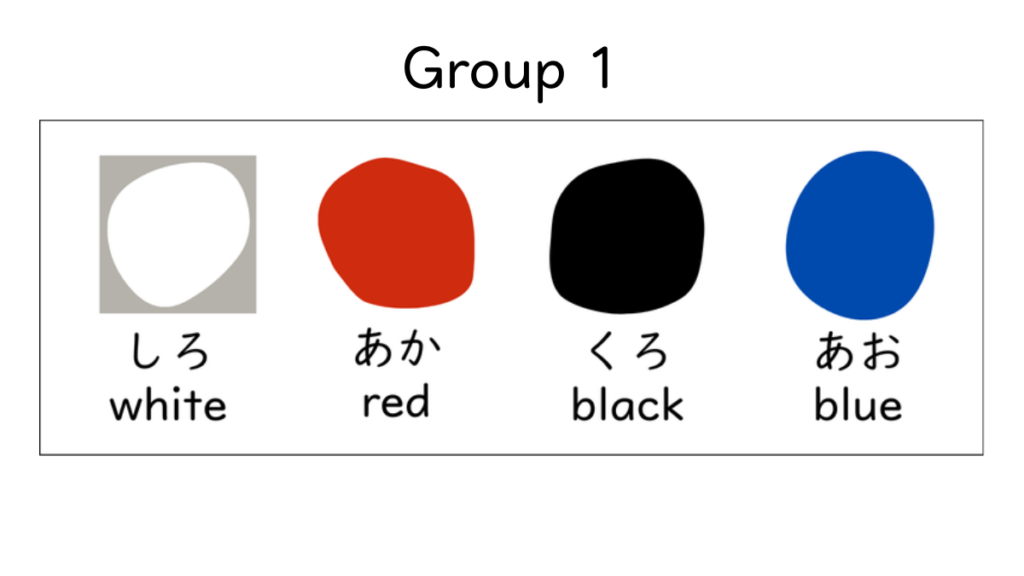
Group 1: 「〇+い」 Adjective Colors
This group has traditional color words that become adjectives by simply adding い. There are only four.
- しろ + い
- あか + い
- くろ + い
- あお + い
📌 Examples:
あかい くるま (a red car)
あおい かさ (a blue umbrella)

Group 2: 「〇いろ+い」 Adjective Colors
Some colors use いろ (“color”) before adding い. There are only two colors in this group.
- きいろ + い
- ちゃいろ + い
📌 Examples:
きいろい とり (a yellow bird)
ちゃいろい かばん (a brown bag)
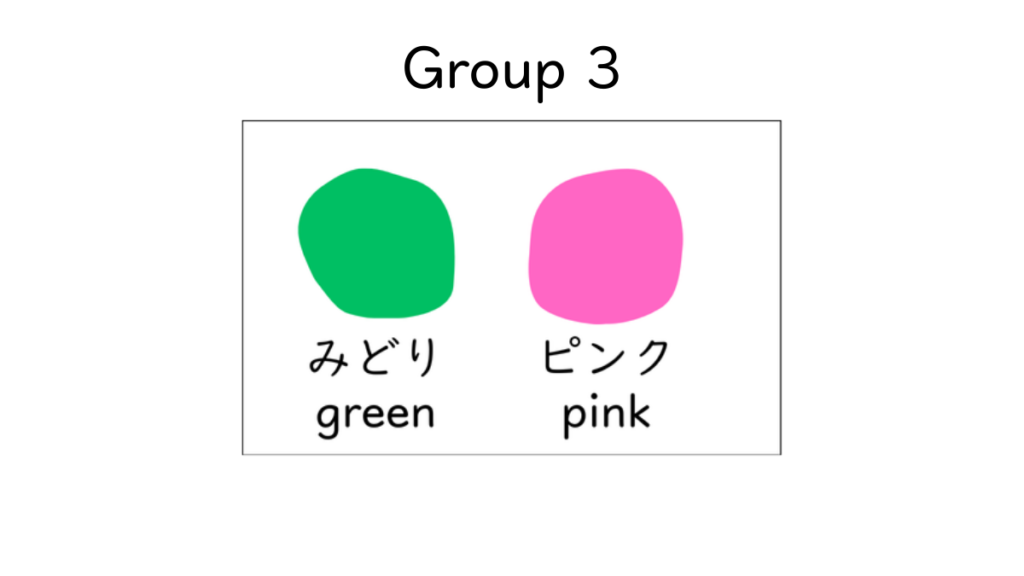
Group 3: 「〇の + noun」 Colors
Other colors—including many katakana loanwords—do not take い. Use 「〇 の + noun」 to describe a noun.
📌 Examples:
みどり の じてんしゃ (a green bicycle)
ピンク の ノート (a pink notebook)
Excerpt from Beginner 1 – Lesson 7
✨ With KIRABOSHI Japanese lessons, you can learn real Japanese effectively even through self-study. Master reading, writing, speaking, and listening efficiently—and see your progress faster than you expect!

