
If you’ve just started to learn Japanese, you may quickly notice something unusual — there are three types of writing systems!
They are hiragana, katakana, and kanji.
You might wonder, “Why three?!”
Let’s take a quick look at how the Japanese writing system came to be.
1. The Origins of Japanese Writing
Originally, Japan didn’t have its own writing system.
Around the 1st century, kanji — Chinese characters — were introduced from China.
Since there had been no writing system before, the Japanese thought, “This is convenient!” and began to use kanji.
However, Japanese and Chinese are very different languages.
It was difficult to represent all the Japanese sounds and grammar using only kanji.
So, over time, the Japanese created a new system — hiragana.
2. Hiragana: The Soft and Gentle Script
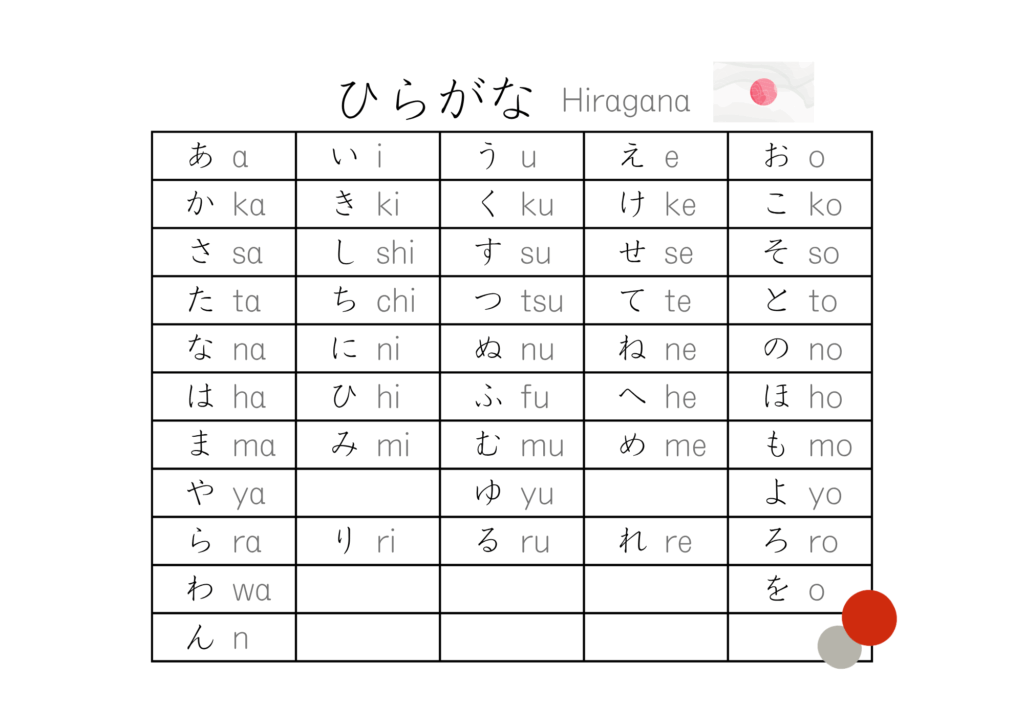
Hiragana is the first set of characters that learners usually study.
It has a smooth, rounded shape that gives it a gentle, flowing look.
There are 46 basic hiragana characters, and they are mainly used for particles (like wa, no, ni) and verb endings.
In everyday writing, hiragana plays a big role in connecting words and making sentences natural and readable.
3. Katakana: The Sharp and Stylish Script
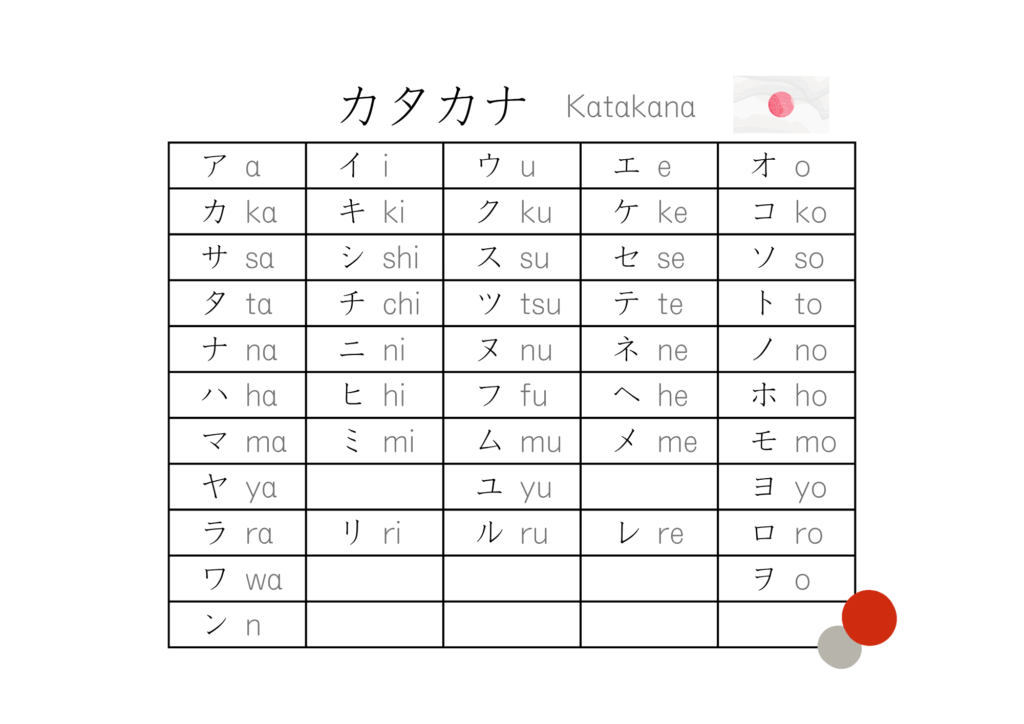
Around the same time as hiragana, katakana was also created.
It began as small marks added to Chinese texts to show how to read them in Japanese word order.
Like hiragana, katakana has 46 characters and represents the same sounds.
Katakana looks angular and sharp, giving it a modern and stylish feel.
Today, it’s mainly used for foreign words, loanwords, and foreign names —
for example, piano (ピアノ) and tennis (テニス).
4. Kanji: The Characters of Meaning

Finally, there’s kanji, the set of characters borrowed from Chinese.
Each kanji carries its own meaning — for example, 木 means “tree,” and 山 means “mountain.”
A single kanji can also have multiple readings, depending on the context.
This makes kanji both fascinating and challenging to learn.
5. Three Systems, One Beautiful Language
Japanese writing combines all three systems —
kanji for meaning, hiragana for grammar, and katakana for foreign words.
By mixing these together, Japanese sentences become not only clear and easy to read, but also visually beautiful.
Learning to use all three systems takes time and patience,
but that’s also part of what makes Japanese so fascinating —
a language that challenges you, yet captures the hearts of learners around the world.

