

A quick guide to Japan’s tricky “this–that–that over there.”
If you’re starting to learn Japanese, one of the first things you’ll notice is how often people use words like kore, sore, and are.
These little words might look simple, but they’re essential for everyday conversation.
これ (kore), それ (sore), and あれ (are) are used to point to things in Japanese.
Which one you use depends on where the object is.
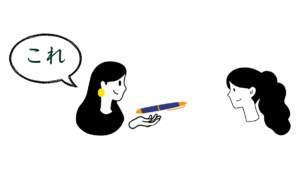
1. これ (kore) – this
Use これ for something near you (the speaker).
📌 Example:
これは ペンです。(Kore wa pen desu.)
→ This is a pen.
2. それ (sore) – that
Use それ for something near the other person (the listener),
but not near you.
📌 Example:
それは ノートですか。(Sore wa nooto desu ka.)
→ Is that a notebook?

3. あれ (are) – that (over there)
Use あれ for something far from both of you.
📌 Example:
あれは なんですか。(Are wa nan desu ka.)
→ What is that (over there)?

This is a short excerpt from Beginner 1 Lesson 2, where we learn about kore, sore, and are. If you enjoyed this sample, you can explore the full Beginner 1 (Lessons 1–20) pack here.
Once you master kore, sore, and are, you’ll start noticing them everywhere—in textbooks, anime, and daily conversations. They’re a small but powerful part of sounding natural in Japanese.

