Why some Japanese calendar dates don’t follow the usual rule
In Japanese, some dates of the month have special readings. They are not simply “number + にち,” so learners usually need to memorize them.
Most of these special readings appear in the first ten days of the month.
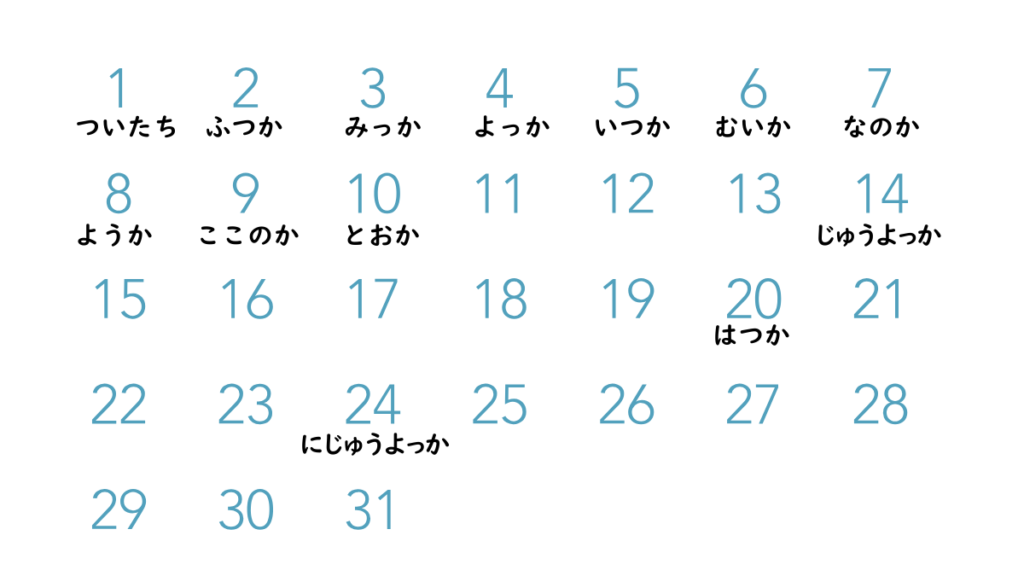
Special Readings (1–10)
| Date | Reading |
|---|---|
| 1日 | ついたち |
| 2日 | ふつか |
| 3日 | みっか |
| 4日 | よっか |
| 5日 | いつか |
| 6日 | むいか |
| 7日 | なのか |
| 8日 | ようか |
| 9日 | ここのか |
| 10日 | とおか |
These readings are used very often in everyday Japanese, so it’s a good idea to learn them early.
Dates from 11 to 31
From the 11th to the 31st, most dates follow a simple rule:
number + にち
Examples:
- 11日
- 25日
- 30日
However, there are three important exceptions:
- 14日
- 20日
- 24日
いちにち vs ついたち
There is also an interesting difference between these two words:
- いちにち = one day
- ついたち = the first day of the month
Both use the same kanji, but the meaning and reading are different.