A quick guide to “this + noun” in Japanese
If you’re learning Japanese, you may have already seen kore, sore, and are. Now it’s time to learn their “noun” versions: kono, sono, and ano.
These words are also used to point to things, but they are always followed by a noun.
この (kono), その (sono), and あの (ano) are used with a noun to describe something. Which one you use depends on where the object is.
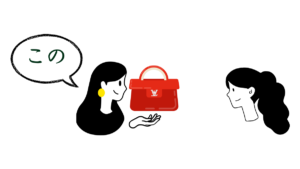
1. この (kono) – this ___
Use この when the thing is near you (the speaker).
📌 Example:
この かばんは わたしのです。
(Kono kaban wa watashi no desu.)
→ This bag is mine.
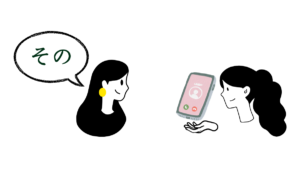
2. その (sono) – that ___
Use その when the thing is near the other person (the listener), but not near you.
📌 Example:
その けいたいは エマさんのですか。
(Sono keetai wa Ema-san no desu ka.)
→ Is that mobile phone Emma’s?
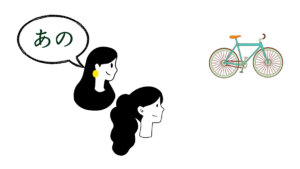
3. あの (ano) – that ___ (over there)
Use あの when the thing is far from both of you.
📌 Example:
あの じてんしゃは さくらさんのです。
(Ano jitensha wa Sakura-san no desu.)
→ That bicycle (over there) is Sakura’s.
What’s the difference?
A simple way to remember:
- この → near you
- その → near the other person (the listener)
- あの → far from both
Also, remember: この / その / あの must be used with a noun, unlike これ / それ / あれ.
This is a short excerpt from Beginner 1 Lesson 3, where we learn about この, その, and あの. If you enjoyed this sample, you can explore the full Beginners 1 (Lessons 1–20) pack here.